
Although Notice Seeking Possession (NOSP) forms are a longstanding and familiar part of housing management, we are increasingly seeing avoidable errors in how they are prepared and served. As a reminder, the NOSP is the prescribed notice used for assured tenancies, and it remains the first step in possession proceedings under the Housing Act 1988. Because of its prescribed status, the form must be completed strictly in accordance with the legislative requirements, and even small deviations can invalidate the notice entirely. This article provides a short ‘back‑to‑basics’ overview to help avoid these common pitfalls.
Prescribed forms: why accuracy matters
The NOSP is a prescribed form, meaning that the wording has been drafted deliberately, to ensure both the landlord and the tenant understand what is being proposed, the grounds relied upon, and the tenant’s rights of response.
For this reason:
- The wording cannot be altered unless the form expressly permits it;
- Any unauthorised alteration may invalidate the notice;
- The notice periods stated in the form must be followed exactly.
These rules are strict because an invalid notice can prevent the court from making a possession order, regardless of the merits of the case. It is essential therefore that the most up-to-date form is used, which can be found online at Assured tenancy forms – GOV.UK .
Follow the form structure
To ensure the NOSP is valid, it must:
- Include the full legislative wording for each ground relied upon;
- Provide full particulars of each ground, with enough detail for the tenant to understand the case;
- Cite the correct tenancy terms when relying on breach grounds such as Ground 12; and
- Maintain the structure and required wording of the prescribed form.
One of the most common issues we see is reliance on Ground 12 without identifying the accurate tenancy clause(s) breached, or asserting legitimate tenancy breaches.
A reminder of the notice periods
The key notice periods required for each ground are set out in the table below. Ensuring these timelines are correct is a crucial part of preparing a valid NOSP.
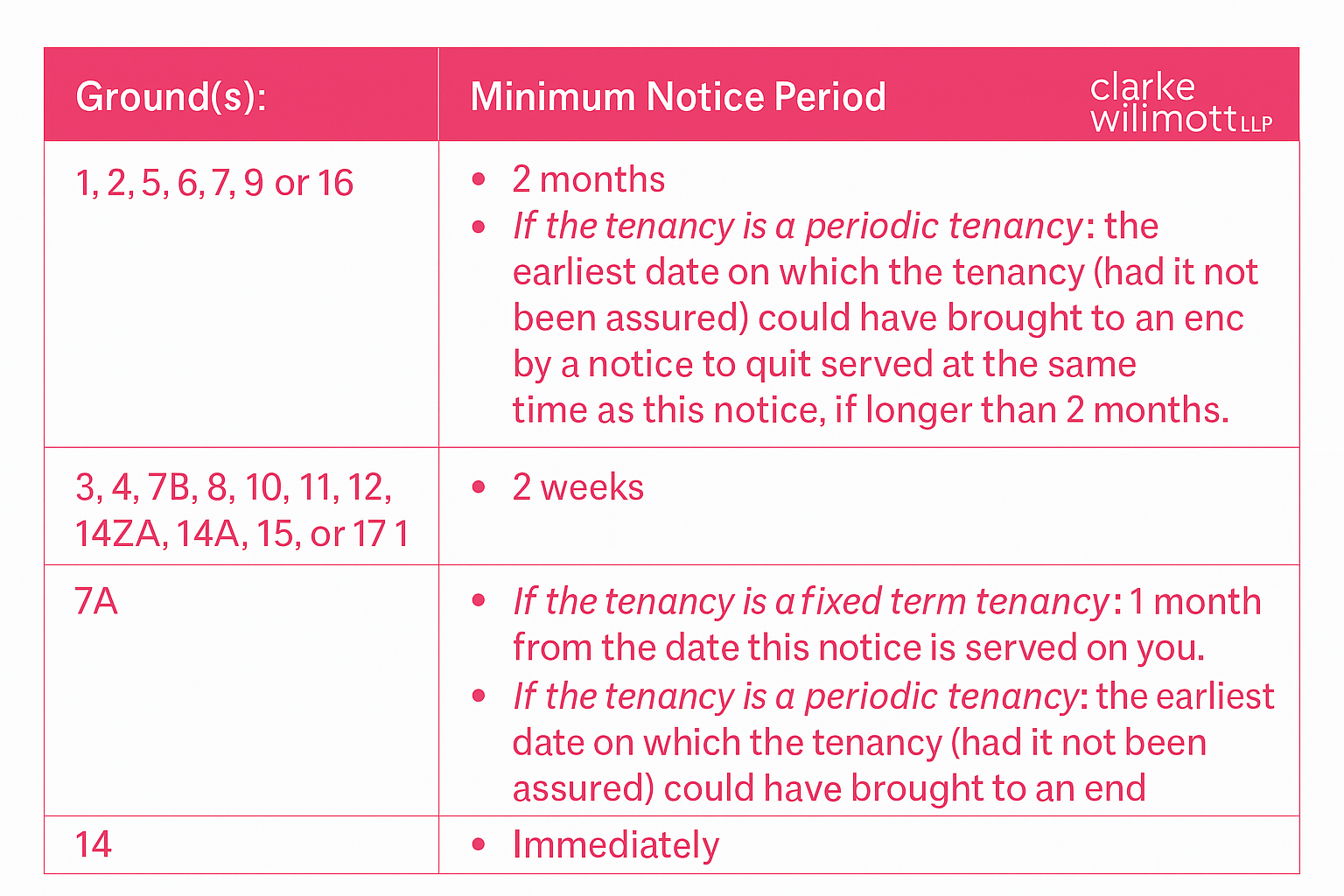
When more than one ground for possession is included in a notice, the landlord must usually apply the longest notice period to the notice as a whole. This means that if shorter‑notice grounds are used alongside a ground requiring a longer period, the notice must reflect the longer period.
However, a different approach applies where anti‑social behaviour grounds are relied on. Grounds 7A and 14 carry their own specific timeframes, which take priority over the general rule. Ground 7A requires four weeks’ (or one month’s) notice, while Ground 14 allows proceedings to begin immediately after service. Where Ground 14 is combined with other grounds, the landlord may still need to apply the longer notice period for those additional grounds, unless the anti‑social behaviour provisions clearly override it.
Why generic guidance is difficult
Notice requirements are highly fact‑specific, and what is correct for one case may be incorrect in another. This makes it difficult to provide blanket guidance beyond the fundamentals. Grounds vary, tenancy types vary, and the facts relied upon in each case will influence how the notice should be completed.
We are, however, always able to assist with:
- Checking or drafting notices;
- Advising on which grounds apply; and
- Confirming the correct notice periods.
Early review often saves considerable time and cost later. If you would like any assistance with the above, please get in touch with our housing management team.